


Ionic Liquids
Rich experience
With decades of experience in researching, manufacturing and marketing organic chemicals, we have become a global supplier of chemical research, development and manufacturing.
Professional team
Genie Chemical has a highly skilled R&D team of more than 200 people.
One-stop service
Quality inspection, production control and after-sales service, providing one-stop service.
QC
It has obtained ISO 9001 certification and has set up a dedicated testing center to implement strict quality control standards at all stages of the production process. Quality inspectors closely monitor the production process of each product to ensure the quality of the final chemical product.
What is Ionic Liquids
Ionic liquids refer to ionic compounds in the liquid state, or ionic compounds whose melting point is lower than a certain temperature. Regular liquids, such as water and gasoline, are primarily composed of electrically neutral molecules; but ionic liquids are primarily composed of charged ions and short-lived ion pairs. Ionic liquids have many potential uses; they are excellent solvents and can act as ionizing species. Especially liquid salts at room temperature are very important for battery applications.


Benefits of Ionic Liquids
The materials showing the highest conductivities, 1-ethyl-3-methylimi-dazolium thiocyanate and dicyanamide exhibited the lowest electro-chemical stabilities. Nevertheless, these materials are good candidates for use in any application where a high conductivity combined with thermal stability and non-volatility is necessary, e.g., 1-dodecyl-3-methylimidazolium iodide (Product No. 18289) in dye-sensitized solar cells.
The electrochemically most stable materials having comparable small conductivities (N-butyl-N-methylpyrrolidinium bis(trifluoromethyl-sulfonyl)imide (Product No. 40963), triethylsulphonium bis(trifluoromethyl-sulfonyl)imide (Product No. 08748), and N-methyl-N-trioctylammonium bis(trifluoromethylsulfonyl)imide (Product No. 00797). These materials are good electrolytes for use in batteries,3 fuel cells,4 metal deposition,5 and electrochemical synthesis of nano-particles.6
For applications where conductivity and electrochemical stability are needed (e.g., supercapacitors7 or sensors8), imidazolium-based ionic liquids with stable anions (e.g., tetrafluoroborate or trifluoromethylsulfonate) are the materials of choice.
Types of Ionic Liquids

Room temperature ionic liquids (RTILs)
Room temperature ionic liquids (RTILs) consist of bulky and asymmetric organic cations such as 1-alkyl-3-methylimidazolium, 1-alkylpyridinium, N-methyl-N-alkylpyrrolidinium and ammonium ions. Phosphonium cations are less common, but offer some advantageous properties.A wide range of anions are employed, ranging from simple halides, which generally suffer high melting points, to inorganic anions such as tetrafluoroborate and hexafluorophosphate, and to large organic anions like bistriflimide, triflate or tosylate.

Low temperature ionic liquids (below 130 K)
Low temperature ionic liquids (below 130 K) have been proposed as the fluid base for an extremely large diameter spinning liquid mirror telescope to be based on the Earth's moon.Polymerized ionic liquids, poly(ionic liquid)s or polymeric ionic liquids, all abbreviated as PIL is the polymeric form of ionic liquids.They have half of the ionicity of ionic liquids since one ion is fixed as the polymer moiety to form a polymeric chain.

Magnetic ionic liquids
Magnetic ionic liquids can be synthesized by incorporating paramagnetic elements into ionic liquid molecules. One example is 1-butyl-3-methylimidazolium tetrachloroferrate.
Application of Ionic Liquids
Application of ionic liquids in wastewater treatment
The ionic liquid is formed by weak hydrogen bonding (C -- H … π) interacting with organic compounds such as aromatic compounds in oilfield wastewater to make them enter ionic liquids to form liquid inclusion complexes, which can be extracted from oilfield wastewater. 1-butyl-3-methylimidazolium hexafluorophosphate[BMIM][PF6],1-hexyl-3-methylimidazolium hexafluorophosphate ([HMIM][PF6]), and 1-octyl-3-methylimidazolium hexafluorophosphate ([OMIM][PF6]), these ionic liquids can effectively treat oilfield wastewater. And with the increase of the alkyl chain length of imidazole group, the COD removal energy rate of sewage increased to 80%. These ionic liquids can also be recycled.
Application of ionic liquids in desulfurization
The lone pair of electrons on the nitrogen atoms in ionic liquids makes them polar. However, the π electron cloud density of thiophene sulfide in oil is high. After the ionic liquid contacts with thiophene sulfide, the dispersion π bond of ionic liquids induces polarization. The polarized π bond and the large π bond of imidazole ring or pyridine ring produce π-π complexation effect, which enhances the force between ionic liquid and aromatic sulfide. This phenomenon makes it easy to extract into the ionic liquid phase. The anion of ionic liquids can also form a “stacking” structure, and sulfide molecules can be inserted into the “stacking” structure to form a liquid phase inclusion complex and achieve the purpose of desulfurization.
Application of ionic liquids in acidification
Ionic liquids can react with water to produce acids, which act to acidify the formation. The ionic liquid 1,3-dialkylimidazole-AlCl3 and water are injected into the stratum respectively and then form acid when they contact in the stratum. Most of the acid will reach farther into the formation, slowing the acidification of the formation. It is environmentally friendly, avoiding corrosion caused by acid contact with equipment.
Application of ionic liquids in demulsification
Ionic liquids can reduce the interfacial tension of the emulsion. It neutralizes the charged material in the emulsion, reducing the electrostatic repulsion between water droplets and promoting the coalescence of water droplets. Hydrogen bonds are formed between the ionic liquid and the rigid film of water droplets. Meanwhile, the rigid film is replaced by ionic liquids and in turn broken through electrostatic interaction. Under this mechanism, channels are built between dispersed water droplets, which increase the size of water droplets and thus play a demulsification effect .
Many ionic liquids are stable because, like larger, more complex species, they have competing intermolecular forces that drive a kind of self-assembly.That is, ionic liquids are frequently structured on a supramolecular but still nanometer scale; cations and anions are organized into discrete clusters, threads, layers, or interpenetrating bicontinuous networks, and these comprise nanodomains that are chemically distinct.An IL may not only have cationic and anionic regions, but also polar and nonpolar regions.Importantly, different kinds of solutes may dissolve or be partitioned into different domains.Thus a single IL may be a good solvent for both polar and nonpolar reagents.In this project we will investigate how the nanostructure of ILs are affected by different solutes, and how this affects solubility.Our primary tool will be neutron diffraction, which allows us to experimentally determine the distribution and relative orientation of different molecular species and even individual functional groups into solvation shells, and also reveals the longer-range nanostructure in the liquid.

What are the Characteristics of Ionic Liquids
1.They are colorless, odorless and have almost no vapor pressure, which makes them useful in many high vacuum systems while reducing environmental pollution problems caused by volatilization.
High thermal and chemical stability, able to maintain liquid state over a wide temperature range, from below or near room temperature to above 300 degrees Celsius.
2.It is non-flammable, non-toxic, has no flammability, no ignition point, large heat capacity and low viscosity.
3.Their high ionic conductivity and decomposition voltage (also called the electrochemical window) are generally as high as 3 to 5 V, making them very useful as electrolytes in electrochemical research.
4.It has strong Bronsted, Lewis and Franklin acidic and super acidic properties, and the acidity and alkalinity can be adjusted.
5.It can dissolve most inorganic substances, metal complexes, organic substances and polymer materials (except polyethylene, PTFE or glass), and can also dissolve some gases, such as H2, CO and O2.
6.Weak coordination ability, which makes them unique applications in coordination chemistry.
7.They are relatively cheap and easy to prepare, making ionic liquids cost-effective in industrial applications.
8.It is recyclable. Because the vapor pressure is very small and non-volatile, it will not evaporate during use and storage. It can be recycled and eliminates volatile organic compounds.
Preparation of Ionic Liquids
Direct synthesis
Ionic liquids are synthesized in one step through acid-base neutralization reaction or quaternary ammonization reaction, which is economical and simple to operate, has no by-products, and the product is easy to purify. Hlrao et al. synthesized a series of tetrafluoroborate ionic liquids with different cations by acid-base neutralization method. In addition, a variety of ionic liquids can be prepared in one step through quaternization reactions, such as halogenated 1-alkyl 3-methylimidazolium salts, halogenated pyridinium salts, etc.
Two-step synthesis
It is difficult to obtain the target ionic liquid by direct method, and a two-step synthesis method must be used. The two-step method for preparing ionic liquids has many applications. The preparation of commonly used tetrafluoroborate and hexafluorophosphate ionic liquids usually adopts a two-step method. First, a halide salt containing the target cation is prepared through a quaternization reaction; then the target anion is used to replace the halide ion or Lewis acid is added to obtain the target ionic liquid. In the second step of the reaction, when metal salts MY (commonly used are AgY), HY or NH4Y are used, Ag salt precipitation or amine salts and HX gas are easily removed, and the strong protonic acid HY is added. The reaction requires stirring at low temperature. Then wash with water several times until neutral, extract the ionic liquid with an organic solvent, and finally remove the organic solvent in a vacuum to obtain pure ionic liquid.
Physical and chemical properties of ionic liquids
The melting point of ionic liquids depends on their crystal strength. The lower the structure symmetry, the more uniform the charge distribution or the weaker the intermolecular force, the lower the melting point of ionic liquid is. With the increase of relative molecular mass, charge aggregation or alkyl branch chain, the melting point of ionic liquid will be higher. However, the melting point of ionic liquids is not directly related to their functional applications.
Ionic liquids are essentially non-volatile or have zero vapor pressure due to the presence of considerable ionic interactions within them. Ionic fluids maintain a fairly low vapor pressure even at high temperatures, which enhances their tolerance to high salt and high temperature harsh environments such as drilling fluids and oil displacement.
The density of ionic liquids is significantly affected by anion, and the density is decreased by increasing anionic carbon chain units. The density of most ionic liquids is higher than that of water, usually within the range of 1.0–1.6 g/cm3.
The viscosity of ionic liquids is mainly determined by a combination of van der Waals forces, hydrogen bonds and Coulomb force interactions. The longer the cationic alkyl chain or the larger the anion volume, the greater the viscosity is. As the temperature increases, the viscosity will decrease. The viscosity range of ionic liquid at room temperature is large, from 10 to 10000 mPa s. So different ionic liquids can modulate different rheological properties of drilling fluids.
Our Factory
With decades of experience in manufacturing and marketing high-quality chemicals, gneechem Company, we supply Organic Chemicals, Biochemicals, Pharmaceutical Intermediates, and more.gneechem has a skilled workforce in research and development. Our team of more than 200 people is responsible for quality testing, production control and after-sales service as a one-stop service. We provide R&D and production solutions to our global customers.We adhere to the principle of "Quality First" and have obtained ISO 9001 certification. We have also set up a dedicated testing center to implement strict quality control standards at all stages of the production process. Quality inspectors closely monitor the production process of each product to ensure the quality of the final chemical products.

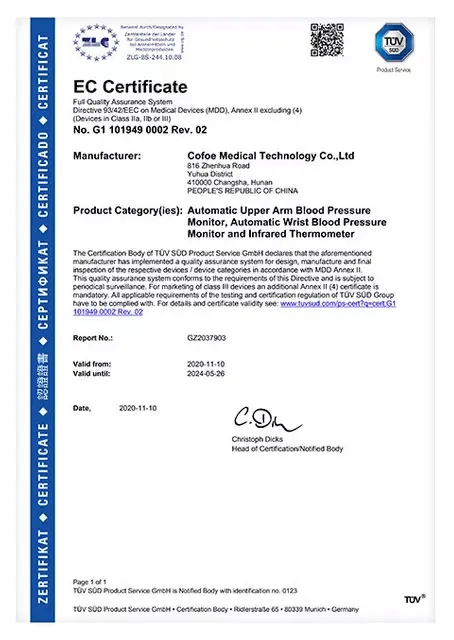
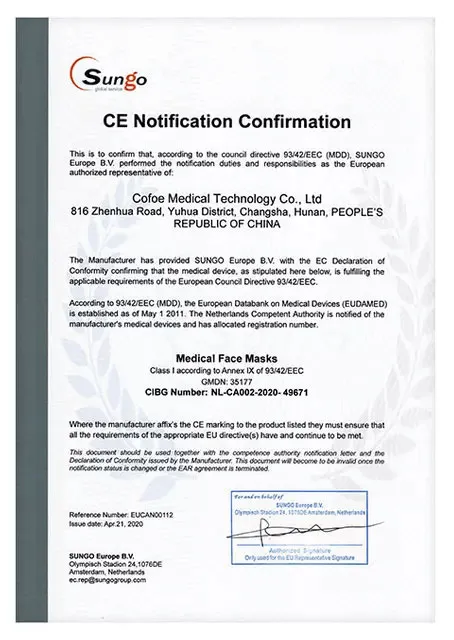
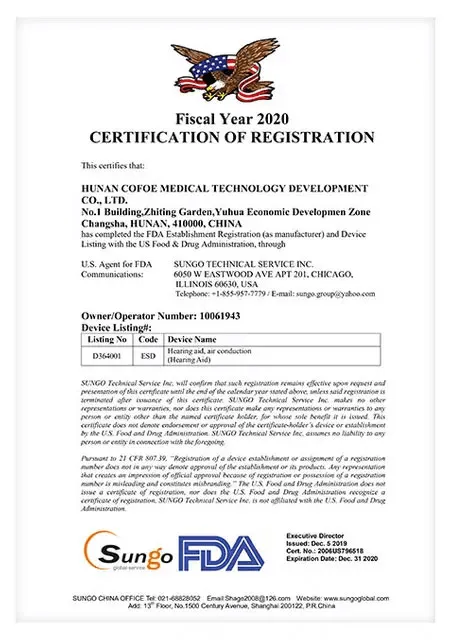
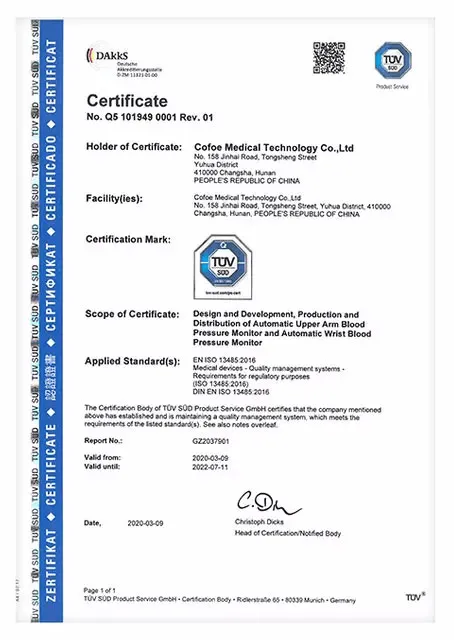
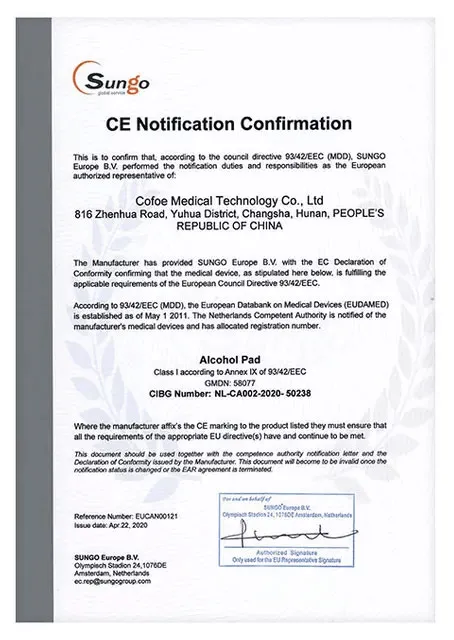
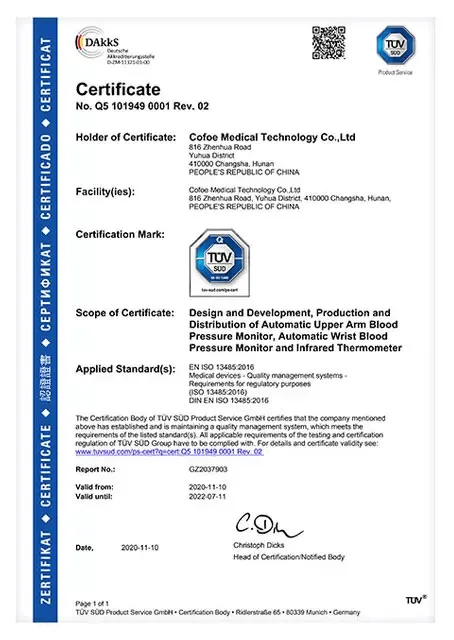
Certifications
FAQ
As one of the leading lonic liquids manufacturers and suppliers in China, we warmly welcome you to wholesale cheap lonic liquids for sale here from our factory. All chemical products are with high quality and competitive price.
ionic liquid cost, 1 decyl 3 methylimidazol 3 ium hexafluorophosphate, ionic liquid trading