Products Description
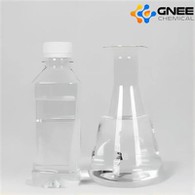
N-Ethylpyridinium Bis(trifluoromethylsulfony)imide is a colorless to light yellow liquid that is liquid at room temperature. It is mainly used as an intermediate in organic synthesis and is widely used in organic synthesis and materials science. Its purity is usually 98%.
1-Butylpyridinium Bis(trifluoromethanesulfonyl)imide should be used with care for its toxicity and corrosiveness, and should avoid direct contact with the skin and eyes. Protective measures should be taken during operation to avoid inhalation of its vapor.


Basic Info
| Product Name | 1-BUTYLPYRIDINIUM BIS(TRIFLUOROMETHYLSULFONYL)IMIDE |
| CAS: | 187863-42-9 |
| MF: | C11H14F6N2O4S2 |
| MW: | 416.35 |
| EINECS: | 200-145-6 |
| Melting point | 26ºC |
| density | 1.44 (30 º) |
| refractive index | 1.4420 to 1.4460 |
| form | clear liquid |
| color | Colorless to Light yellow to Light orange |
| λmax | 335nm(CH3CN)(lit.) |

Uses
N-Ethylpyridinium Bis(trifluoromethylsulfony)imide is found in the field of electrochemistry and can be used as electrolyte, battery liquid and catalyst, etc. Its ionic liquid properties have good solubility and conductivity, and it is often used in various electrochemical applications.
Inspection Process
Appearance and properties inspection
Place the sample in a transparent and colorless glass container under normal light. Observe that its appearance should be a transparent liquid with a color between colorless and light yellow to light orange. If the color is too dark or there is turbidity, precipitation, stratification, etc., the product may have quality problems.
Melting point determination
Instrument preparation: Select a suitable melting point tester and ensure that the instrument is calibrated, can accurately measure the temperature, and the heating rate can be stably controlled.
Sample processing: Take an appropriate amount of sample, grind it into fine powder, and dry it according to the conditions of drying loss under the drug item. Since the melting point of this substance is below 135℃, it can be dried overnight in a phosphorus pentoxide dryer.
Measurement operation: Put the dried sample into the capillary for melting point determination, so that the powder is tightly gathered at the molten seal end of the capillary, with a height of about 3mm. Put the thermometer into a container containing the temperature transfer liquid, and add the temperature transfer liquid so that the liquid level of the temperature transfer liquid after heating is suitable for the immersion line of the thermometer. For this sample with a melting point of 26℃, water can be selected as the temperature transfer liquid. Heat the temperature transfer liquid. When the temperature rises to about 16℃, immerse the capillary containing the sample into the temperature transfer liquid and attach it to the thermometer. The position must be such that the content of the capillary is just in the middle of the mercury ball of the thermometer. Continue heating and adjust the heating rate to 1.0~1.5℃ per minute. Stir constantly during heating to keep the temperature of the temperature transfer liquid uniform. Record the temperature of the sample from the initial melting to the complete melting. Repeat the measurement 3 times and take the average value as the melting point measurement result.
Density determination
Balance cylinder method: Use a high-precision balance to accurately weigh a certain mass of sample and record the mass value m. Then slowly pour the sample into the measuring cylinder, read the volume value V of the sample in the measuring cylinder, and calculate the density of the sample according to the density formula ρ=m/V. It is necessary to avoid volatilization and loss of samples during operation, and the accuracy of the measuring cylinder should be able to meet the measurement requirements.
Densitometer method: Select a densitometer with appropriate range and accuracy, gently place it in the container containing the sample, and read its scale value after the densitometer stabilizes, which is the density of the sample. When using the densitometer, make sure it is clean, and try to control the temperature at around 30℃ during measurement to match the given density value conditions.
Refractive index detection
Instrument calibration: Before using the refractometer, the refractometer needs to be calibrated with a standard material with a known refractive index to ensure the accuracy of the instrument measurement.
Measurement operation: Drop an appropriate amount of sample on the prism surface of the refractometer, gently close the prism, and evenly distribute the sample between the prisms to avoid bubbles. Adjust the temperature of the refractometer to room temperature or close to room temperature, and read the refractive index value after the temperature stabilizes. The measured value should be between 1.4420 and 1.4460.
Maximum absorption wavelength detection
Solution preparation: Accurately weigh a certain amount of sample, use acetonitrile as a solvent, and prepare a solution of appropriate concentration. The concentration of the solution should be selected so that the absorbance value of the sample at the maximum absorption wavelength is within a suitable range, generally between 0.2 and 0.8.
Spectral scanning: Use a UV-visible spectrophotometer to perform a spectral scan of the sample solution within a certain wavelength range. The scanning speed can be appropriately selected according to the instrument performance and sample characteristics. During the scanning process, observe the curve of absorbance changing with wavelength and find the maximum absorption wavelength λmax, whose measured value should be 335nm.
Company Profile
Gnee Chem with decades of experience in research, manufacturing and marketing of organic chemicals, is one of the leading exporters of chemical products in Henan, China.We have direct import and export rights and are ISO 9001 certified, and our products are sold worldwide.
Our team consists of more than 200 people, and over the years, the whole team continues to progress to meet the actual needs of our customers .The company has decades of experience in producing and selling high-quality chemicals, offering organic chemicals, biochemicals, pharmaceutical intermediates and other products.
With the best products, the best service and the best reputation, we are willing to be your most reliable long-term partner!


FAQ
Q:Could you please send me your best price?
A:Yes, we cherish every cooperative customer and work hard to facilitate transactions.
And before quoting,please kindly consult us and provide:
1)What's products do you need?.
2)Using for yourself?Or for resale?.
So that we can recommend the most corresponding .
Q: How do you control the quality?
A: We have more than 10 years experience in exporting chemicals, our customers are all over the world, our professional and strict quality control system helps us to keep alive in this market.
Q : Do you have stock?
A: Most of the products are in normal production and we can ship immediately.
Q:When is your payment term ?
A:Payment shall be 30%-50% deposit by T/T,balance 50%-70% paid by T/T,D/P after inspection but before shipment.
Hot Tags: cas 187863-42-9 | 1-butylpyridinium bis(trifluoromethylsulfonyl)imide, China cas 187863-42-9 | 1-butylpyridinium bis(trifluoromethylsulfonyl)imide manufacturers, suppliers, factory, chemical industry ionic liquids, High Quality 99 1 n Butyl 3 Methylimidazolium methanesulfonate, ionic liquid training, ionic liquid trends, ionic liquid suppliers, green ionic liquids