




why is pure acetic acid known as glacial acetic acid?
Pure acetic acid and glacial acetic acid are the same chemical compound (CH₃COOH), but they differ in water content and purity. Glacial acetic acid contains 99–100% pure acetic acid with minimal water (<0.5%) and crystallizes at 16.6°C, giving it the name "glacial." Diluted acetic acid solutions contain more water, remain liquid at normal temperatures, and are less corrosive. These differences influence industrial applications, chemical behavior, and safety handling.

What Freezing Point Makes Pure Acetic Acid "Glacial"?
Glacial acetic acid freezes at 16.6°C, forming translucent, needle-shaped crystals that resemble ice or small glaciers. This visual trait is the reason for the term "glacial," derived from the Latin glacies (ice). By contrast, a 10% acetic acid solution freezes around −2°C and never forms these distinctive crystals under normal conditions. The high freezing point of pure acetic acid makes temperature control essential during storage and transportation.
Why is Glacial Acetic Acid Highly Pure?
Purity is critical for the "glacial" property. Only glacial acetic acid with ≥99.5% purity can form ice-like crystals at 16.6°C. Even 1% water can lower the freezing point by roughly 2°C and prevent crystal formation. Standard vinegar (4–8% acetic acid) remains liquid down to −10°C and does not exhibit glacial behavior. Maintaining water content below 0.5% ensures the hydrogen-bonded dimeric structure that drives high-temperature crystallization.
When and How Did the Name "Glacial Acetic Acid" Originate?
The term dates back to the late 18th century. In 1789, Russian chemist T.Y. Lovitz observed crystalline acetic acid freezing at 15–16°C and described it as "glacial." Early 19th-century chemists, including Hermann Kolbe, adopted the term to distinguish glacial acetic acid from dilute vinegar solutions. By 1850, "glacial acetic acid" was widely recognized in laboratories and industrial processes as the standard name for anhydrous, high-purity acetic acid.
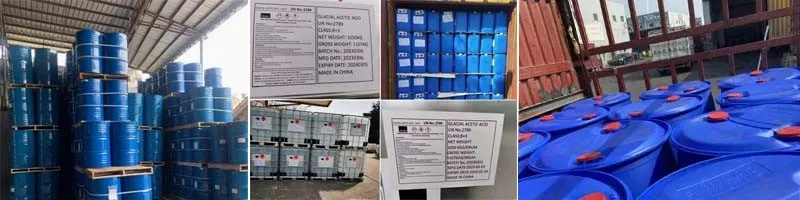
What Are the Industrial Applications and Storage Requirements of Glacial Acetic Acid?
Glacial acetic acid is essential in high-precision industrial and laboratory applications due to its low water content. It is widely used in:
- Pharmaceutical synthesis and intermediate production
- Esterification and organic chemical reactions
- Textile dyeing and finishing processes
- Laboratory reagents requiring anhydrous conditions
- Industrial chemical manufacturing
Diluted acetic acid solutions (4–30%) are primarily used in food processing, vinegar production, household cleaning, and water treatment. For instance, 5% acetic acid is used in vinegar, 10% for household cleaning, and 20–30% for general industrial applications.
The 16.6°C freezing point of glacial acetic acid requires warehouse temperatures ≥18°C to prevent crystallization. Crystallized acid expands ~11% in volume, which could rupture steel or plastic containers if not properly managed.

How Do Physical Properties Differ Between Acetic Acid and Glacial Acetic Acid?
Glacial acetic acid solidifies below 16.6°C due to its high purity, whereas diluted acetic acid remains liquid under normal storage conditions. The water content in standard acetic acid solutions lowers the freezing point and reduces corrosivity. In contrast, the high-purity glacial acetic acid is highly corrosive and requires protective handling, including gloves, goggles, and corrosion-resistant storage containers.
Safety Differences Between Acetic Acid and Glacial Acetic Acid
Safety considerations for glacial acetic acid and acetic acid vary significantly depending on concentration. Diluted acetic acid solutions are less hazardous and suitable for food and household use, though higher concentrations may still cause irritation. Glacial acetic acid is highly corrosive, can cause severe burns on skin and eyes, and requires strict PPE and ventilation for industrial handling.
When Should Acetic Acid and Glacial Acetic Acid Be Used?
Diluted acetic acid (4–30%) is suitable for food processing, cleaning, vinegar production, and water treatment. Its lower concentration ensures safer handling.
Glacial acetic acid (≥99.5% purity) is required in laboratory synthesis, industrial chemical manufacturing, esterification reactions, and pharmaceutical production due to its high purity and controlled chemical behavior.
FAQ: Glacial Acetic Acid and Acetic Acid
What is the difference between acetic acid and glacial acetic acid?
Acetic acid solutions contain water (4–30%), while glacial acetic acid is ≥99.5% pure with <0.5% water. The water content affects freezing point, crystallization, corrosivity, and industrial applications.
Why is pure acetic acid called glacial acetic acid?
Because ≥99.5% pure acetic acid freezes at 16.6°C into ice-like crystals, resembling glaciers.
How should glacial acetic acid be stored?
It must be stored at temperatures ≥18°C in corrosion-resistant drums, IBCs, or bulk tanks to prevent crystallization and expansion (~11%).
Can diluted acetic acid crystallize like glacial acetic acid?
No, standard acetic acid solutions contain sufficient water to prevent ice-like crystal formation at normal temperatures.
What industries use glacial acetic acid the most?
Pharmaceutical, chemical synthesis, laboratory reagents, esterification, and textile industries.
Is glacial acetic acid hazardous?
Yes, it is highly corrosive and can cause burns on skin and eyes. PPE and proper ventilation are mandatory for handling.
Can glacial acetic acid be diluted safely?
Yes, it can be diluted with water, but always add acid to water slowly with appropriate safety measures to prevent exothermic hazards.