




what is ethyl acetate EA(CAS 141-78-6)?
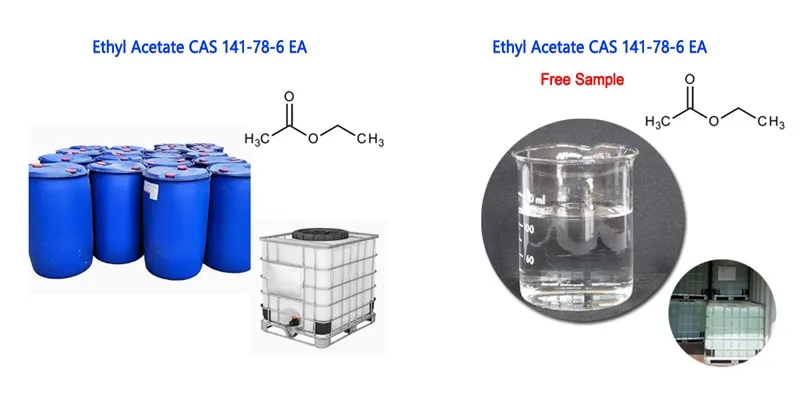
Ethyl acetate (EA), also known as ethyl ethanoate, is an organic compound with the chemical formula C₄H₈O₂. Ethyl acetate CAS number is 141-78-6. It is an ester containing the functional group -COOR (a double bond between carbon and oxygen), with a melting point of -84°C, boiling point 76.6–77.5°C, flash point 4°C, density 0.902 g/cm³, and appears as a colorless transparent liquid. Ethyl acetate undergoes common ester reactions including hydrolysis, amination, ester exchange, and reduction. It is primarily used as a solvent, food flavoring agent, and degreasing agent.
What are the properties of ethyl acetate?
The properties of ethyl acetate (EA) determine its application scenarios and operational requirements, primarily categorized into physical and chemical properties:
Ethyl acetate (EA) physical properties: At room temperature, it is a colorless transparent liquid with a strong fruity aroma (e.g., pear, banana), a key characteristic for its use in flavorings; - Low boiling point (approximately 77.1°C), high volatility, and low density (approximately 0.902 g/cm³ at 20°C), less than water; - Miscible with most organic solvents including ethanol, diethyl ether, and chloroform; slightly soluble in water, with its aqueous solution being neutral.
Ethyl acetate (EA) chemical properties: Exhibits typical ester reaction characteristics, undergoing hydrolysis under acid or base catalysis to produce acetic acid and ethanol, with alkaline hydrolysis (saponification) being more complete; It undergoes ester hydrolysis to form new esters and alcohols and participates in addition reactions. It is flammable, and its vapors form explosive mixtures with air within a concentration range of 2.0% to 11.5% (by volume). Exposure to open flames or high temperatures can ignite combustion, necessitating strict fire and explosion prevention measures.
What are the uses of ethyl acetate in industry?
- Industrial Solvents (Core Applications)
Paint Thinners: Primary solvent for nitrocellulose lacquers and inks (accounting for 50% of global consumption)
Adhesives: Component in instant adhesives and nail polish removers
- Food & Flavors
Edible Flavoring Agents: Used to formulate fruit flavors (e.g., strawberry, banana)
Food Additives: Used as extraction solvents (requires food-grade purity)
- Pharmaceutical & Chemical Industries
Drug Extraction: Medium for extracting antibiotics and vitamins
Organic Synthesis: Synthesis of intermediates like ethyl acetoacetate
- Laboratory Applications
Chromatography Analysis: Component of HPLC mobile phases
Reaction Solvent: Medium for ester exchange reactions

ethyl acetate solvent uses
ethyl acetoacetate safety data sheet
| Chemical name | Ethyl acetoacetate |
| Synonyms | Acetoacetic ester; EAA |
| CAS number | 141-97-9 |
| Molecular formula / weight | CH₃COCH₂COOC₂H₅ / 130.14 g·mol⁻¹ |
| Appearance | Colorless to pale yellow liquid |
| Odor | Characteristic, fruity/acetone-like |
| Boiling point | ~180 °C (760 mmHg) |
| Melting point | ~ −53 °C |
| Density | ~1.03 g·cm⁻³ (20 °C) |
| Solubility (water) | ~130 g·L⁻¹ (slightly soluble) |
| Vapor pressure | ~0.26 hPa (20 °C) |
| Flash point / Autoignition | Flash point ≈ 70–74 °C; autoignition ~350 °C |
| Explosion / flammability | Flammable liquid and vapor; wide flammable limits reported |
| GHS classification (common) | H225 (Highly flammable liquid & vapour); H314 (Causes severe skin burns and eye damage); H336 (May cause drowsiness or dizziness) |
| Signal word / Pictograms | Danger; GHS02 (flame), GHS05 (corrosion), GHS07 (exclamation) |
| Hazard statements (typical) | H225, H314, H336 |
| Precautionary (typical) | Keep away from heat/sparks/open flame; wear gloves/eye/face protection; avoid inhalation; store cool & well-ventilated |
| First aid measures (summary) | Inhalation: move to fresh air; Skin: remove contaminated clothing, wash with water; Eyes: rinse cautiously for several minutes and seek medical attention; Ingestion: do NOT induce vomiting-seek medical help. |
| Firefighting measures | Use foam, dry chemical, CO₂; wear full PPE and SCBA; cool containers with water spray |
| Accidental release | Eliminate ignition sources; ventilate; contain spill; absorb with inert material; collect for disposal; use PPE |
| Handling & storage | Handle in well-ventilated area; ground/bond containers; keep tightly closed in cool, dry place away from ignition sources |
| Exposure controls / PPE | Local exhaust ventilation; chemical-resistant gloves; safety goggles/face shield; protective clothing; where vapors possible, respirator per local regs |
| Stability / reactivity | Stable under normal conditions; avoid strong oxidizers, strong bases/acids and heat |
| Toxicology (summary) | Acute oral LD₅₀ (rat) reported ~3980 mg·kg⁻¹; may irritate respiratory tract, skin, eyes; affects CNS at high exposures |
| Ecotoxicity / Disposal | Avoid release to environment; dispose according to local regulations; consult SDS for details |
| Transport | UN number and packing group depend on quantity/classification in local regs - follow current SDS and transport rules |
Why Choose Gneebio for Ethyl Acetate EA (CAS 141-78-6)?
For companies looking to source Ethyl Acetate EA (CAS 141-78-6), Gneebio offers a reliable supply backed by over a decade of experience in chemical manufacturing and export. With strict quality control, competitive pricing, and flexible packaging options.
Our strict quality control and comprehensive certifications - including ISO9001, ISO14001, GMP, USP, and EP - ensure that every batch meets international standards.
Related Chemical Products from Gneebio
Bulk Industrial buyers often purchase Ethyl Acetate EA together with other solvents and intermediates.
Here are the most popular products:
| Product Name | CAS |
|---|---|
| Cyclohexanone (CYC) | 108-94-1 |
| Methyl Methacrylate (MMA) | 80-62-6 |
| 2-Methoxyethanol | 109-86-4 |
| Propionic Acid | 79-09-4 |
| Ethylene Glycol (Meg) | 107-21-1 |
| N, N-Dimethylacetamide (DMAC) | 127-19-5 |

Purchase Chemical Raw Materials Click here: TIANJIN GNEE BIOTECH CO., LTD.