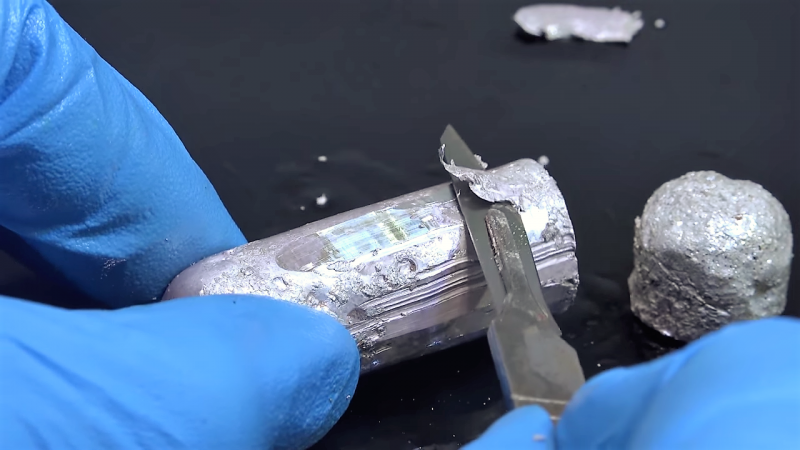
Metallic sodium has the following chemical properties:
1. The outermost layer of the sodium atom has only one electron, which is easy to lose, so it has strong reducing properties.
2. Sodium can directly react with non-metallic elements with large electronegativity, such as oxygen, sulfur, nitrogen, hydrogen and halogens, and usually forms ionic compounds.
3. At high temperatures, sodium can take away oxygen from oxides or chlorine from chlorides to reduce metals.
4. Sodium and its ions have a characteristic flame color - yellow, so flame color reactions are often used to test them in analytical chemistry.
The application of metallic sodium is very wide, including but not limited to the following fields:
1. As a reducing agent, it is used in the defense industry to reduce metals such as titanium, zirconium, niobium, and tantalum from their molten halides.
2. In the field of chemical raw materials, it is used to produce a variety of sodium-containing compounds, such as sodium butyl rubber, sodium hydride, sodium peroxide, sodium cyanide, and sodium carbonate.
3. To manufacture alloys, such as sodium amalgam as a reducing agent in organic synthesis, sodium-lead alloys for the production of gasoline anti-knock agents, and sodium-potassium alloys as coolants and heat exchangers for nuclear reactors.
4. As an electric light source, high-pressure sodium lamps are widely used in highway lighting because of their yellow light fog-penetrating power.
5. In the food industry, as a neutralizing agent and leavening agent, it is used in the production of amino acids, soy sauce and flour-based foods.
6. In the metallurgical industry, it is used as a smelting flux, a flotation agent for ore dressing, and a desulfurizer in steelmaking and antimony smelting.