


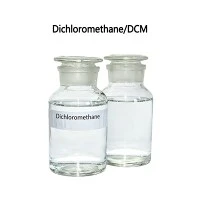


Introduction
Dichloromethane - better known in industry as DCM or methylene chloride (CAS 75-09-2) - is a clear, colorless chlorinated solvent that shows up in a surprisingly wide range of processes, from stripping old paint off metal to extracting caffeine from coffee. That range is exactly what confuses first-time buyers: the product sold under "DCM" and the one sold under "methylene chloride" are the same chemical, but knowing that doesn't tell you whether it's the right fit for your process, or what you need to handle it safely. This page covers what DCM actually is, where it's used today (versus where it used to be used), and what to check before ordering it.
1. Basic Identification
| Property | Information |
|---|---|
| Chemical Name | Dichloromethane |
| Common Name | Methylene Chloride, DCM |
| CAS No. | 75-09-2 |
| Chemical Family | Chlorinated Solvent |
| Appearance | Clear, colorless liquid |
| Volatility | High |
2. Physical Properties
| Property | Value |
|---|---|
| Boiling Point | 39.6°C |
| Melting Point | -96.7°C |
| Density | 1.326 g/cm³ (20°C) |
| Flash Point | None (non-flammable liquid) |
| Solubility in Water | About 20 g/L; miscible with most organic solvents |
The low boiling point is worth paying attention to - it's the reason DCM works so well as a paint stripper and extraction solvent. It gets into a substance, dissolves it, and then evaporates off quickly at room temperature without leaving much behind. And unlike many industrial solvents, it has no flash point at all, which is often the deciding factor for facilities trying to cut down on flammability risk.
3. What Is Dichloromethane Used For?
Paint and Coating Applications
This is DCM's biggest use by far. It's the workhorse behind most professional paint strippers and removers, and it also shows up as a diluent in coatings, inks, and adhesives. It's aggressive enough to break down resins, plastics, and cured polymer films - which is exactly what you want when the goal is stripping paint off a surface fast.
Solvent and Extraction
DCM is a common extraction solvent, used to pull caffeine out of coffee, isolate flavor compounds, and process natural products. It's also used as a cleaning agent for electronic components and precision parts, where a solvent that dissolves oils and residues but evaporates cleanly is exactly what's needed.
Pharmaceutical Intermediate
In pharmaceutical manufacturing, DCM often functions as both a raw material and a reaction medium for drug synthesis. Its solvency and the fact that it leaves little residue behind make it a practical choice at several stages of production.
Chemical Intermediate
DCM is also a feedstock chemical - it's used to produce fluorocarbons like HFC-32, along with other chlorinated derivatives. Here it's not acting as a solvent at all, but as a raw material that gets consumed in the reaction.
Adhesives and Foam
It's used as a solvent carrier in some adhesive formulations. It was also once a common foam blowing agent, though that use has largely disappeared due to environmental and regulatory restrictions.
Refrigerant
DCM has a history as a refrigerant, but you won't find it in modern equipment anymore - it's been phased out for environmental and toxicity reasons.

4. Active Uses vs. Discontinued Uses
Not every application on this list is still current, which matters if you're trying to figure out what a supplier's DCM is actually for.
| Application | Status |
|---|---|
| Paint stripping / coating diluent | Dominant, active use |
| Extraction (caffeine, flavors, natural products) | Active |
| Electronic/precision parts cleaning | Active |
| Pharmaceutical intermediate | Active |
| Fluorocarbon / chemical intermediate production | Active |
| Adhesive solvent carrier | Active |
| Foam blowing agent | Mostly phased out |
| Refrigerant | Obsolete |
5. Safety Notes
The one fact every buyer needs to know before working with DCM: it's classified as a suspected carcinogen (IARC Group 2A). That classification drives most of the handling requirements around it -
- Adequate ventilation and appropriate PPE
- Avoiding prolonged skin contact
- Storing it in a cool, ventilated area away from open flames
- Accounting for its heavy vapors, which sink and collect at floor level rather than rising and dispersing
That last point trips people up more than it should. Because DCM vapor is heavier than air, overhead ventilation alone often isn't enough - low points in a room or a poorly ventilated basement can build up vapor concentration even when the ceiling fans are running fine.

6. Frequently Asked Questions
What is dichloromethane used for?
Mainly paint stripping and coating dilution, extraction (caffeine, flavors, natural products), pharmaceutical manufacturing, and as a feedstock for fluorocarbon production.
Is dichloromethane the same as methylene chloride?
Yes - same compound, same CAS number (75-09-2), just two different common names.
Is dichloromethane flammable?
No. It has no flash point and is classified as non-flammable.
Is dichloromethane dangerous?
It's classified as a suspected carcinogen (IARC Group 2A), so it needs proper ventilation, PPE, and careful handling - especially given how its vapors settle at floor level.
What is the CAS number of dichloromethane?
75-09-2.
Is dichloromethane still used as a refrigerant?
No, that use is essentially obsolete in modern equipment.
7. Conclusion
DCM's real-world uses today center on paint stripping, extraction, pharmaceutical synthesis, and chemical feedstock production - its old roles as a foam blowing agent and refrigerant have mostly faded out. Whatever the application, the carcinogen classification means grade, documentation, and handling precautions deserve as much attention as price.
Looking for dichloromethane for industrial or bulk applications? Contact us for specifications, COA, packaging options, and a quotation.