




o-Xylene (CAS 95-47-6) gets judged by buyers on three numbers before it ever leaves the loading dock: purity, density, and boiling point. TIANJIN GNEE BIOTECH CO., LTD. put together the answers below for procurement teams and lab staff who need to check a quote or a COA against real numbers, not just a label.
Purity of o-Xylene
The purity of o-Xylene on the commercial market runs anywhere from 95% up to 99.5%, and which end of that range a buyer needs depends on what it's going into. Solvent-grade material - blending, coatings, cleaning formulations - is usually fine at ≥98% (GC), and paying more than that often doesn't buy anything useful. Phthalic anhydride production is the one place buyers should push for ≥99% with tight moisture control, since isomer carryover or leftover water in the batch can quietly shorten catalyst life and pull yield down over time. A COA worth trusting shows three numbers together - GC purity, water content (Karl Fischer), isomer ratio - because any one of them alone can hide what the other two would catch.
Density of o-Xylene
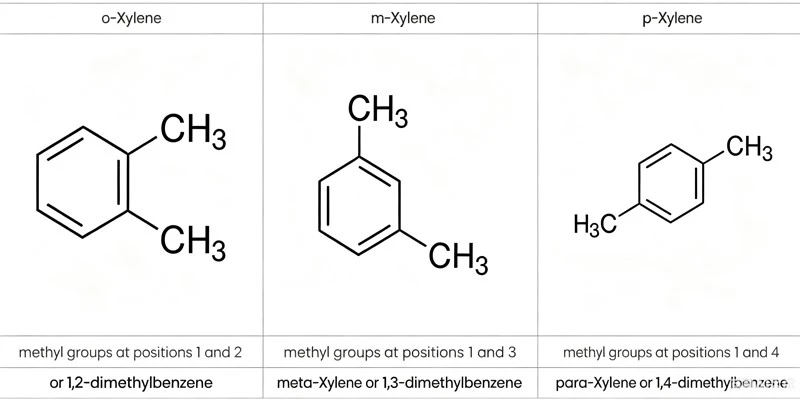
The density of o-Xylene sits at about 0.880 g/cm³ (0.8802 g/mL) at 20°C, the heaviest of the three xylene isomers - m-xylene runs closer to 0.864, p-xylene to 0.861. That gap is small on paper but useful in practice: a batch reading noticeably off 0.880 is usually isomer drift, not a bad scale. The catch is temperature - density moves enough with it that comparing two readings taken at different temperatures can look like a failed spec when nothing's actually wrong. Match the test temperature to whatever the supplier used as their reference first. o-Xylene doesn't mix with water but dissolves freely in most organic solvents, which tracks with its nonpolar, aromatic makeup.
View Detailed o-Xylene Product Information
Boiling Point of o-Xylene
The boiling point of o-Xylene is around 144.4°C (291.9°F), the highest of the three xylene isomers, and that's the whole reason distillation can pull it out of a mixed xylene stream at plant scale. The margin above m-xylene (139.1°C) is only about 5°C - enough for a tight, well-run column, but not much room for error, which is why boiling-range drift is often the first sign a supplier's process is slipping, before purity numbers even move. Melting point is around -25.2°C (-13.4°F), so it stays liquid through basically any storage or transport condition. Flash point sits near 32°C, standard flammable-liquid territory for anyone already handling aromatic solvents.
| Property | o-Xylene | m-Xylene | p-Xylene |
|---|---|---|---|
| Density (g/cm³, ~20°C) | 0.880 | 0.864 | 0.861 |
| Boiling point (°C) | 144.4 | 139.1 | 138.3 |
| Melting point (°C) | -25.2 | -47.9 | 13.3 |
Checking a Shipment Against These Numbers
TIANJIN GNEE BIOTECH CO., LTD. sends purity, density, and boiling point data with every o-Xylene lot, so buyers can check a shipment against the spec they actually ordered rather than the one printed on the drum. Running all three checks on receipt is usually enough to catch a problem before it costs a production run.
Related keywords: o-Xylene CAS 95-47-6, o-Xylene purity, o-Xylene density g/cm3, o-Xylene boiling point, o-Xylene melting point, o-Xylene COA, o-Xylene solvent grade, xylene isomer comparison, high purity o-Xylene, o-Xylene supplier, o-Xylene specifications