


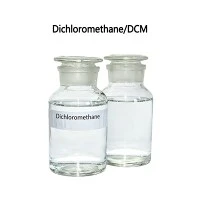


What Counts as a Chemical Reagent
A chemical reagent is a substance or prepared solution that is used to carry out, detect or measure a chemical reaction, and that is characterised by a stated purity and a defined impurity profile. The definition is functional rather than structural: the same compound can be a reagent in one laboratory and a raw material in another, and the difference lies in the guarantees that accompany it. Water is the clearest example, since ordinary tap water, distilled water and reagent grade water of defined resistivity and oxidisable-matter content are the same molecule sold under three different specifications.
Purity grade exists because impurities interfere with a determination. A reagent grade is therefore defined by limits on the specific species that would affect the analysis in which it is used: trace metals in a reagent for atomic spectroscopy, halides in a reagent for gravimetric silver determination, and organic matter in a reagent for oxidimetric titration. The grade name summarises the regime, and the specification sheet states the individual limits.
The Grade System in Practice
| Grade | Typical regime | Usual application |
|---|---|---|
| Technical grade | Assay stated, impurities uncontrolled or loosely controlled | Industrial process feed, cleaning, pH adjustment |
| Analytical reagent (AR) | Assay and specific impurity limits for routine analysis | General laboratory analysis and preparation of solutions |
| Guaranteed or high purity reagent | Tighter assay and trace-metal limits than AR | Instrumental analysis, reference solutions, method development |
| Reagent grade certified to a published specification | Limits published in a standard or a recognised compendium, batch tested | Methods that must cite a traceable reagent specification |
| Pharmacopoeial grade | Monograph limits for identity, assay and impurities | Pharmaceutical manufacture and quality control |
| Food grade | Food-additive and residue limits | Food and beverage processing |
| Ultrapure or electronic grade | Metal limits in the parts per billion or trillion range | Semiconductor, trace analysis, high-purity synthesis |
The Parameters That Define a Reagent Specification
A reagent certificate typically covers identity, assay, and a set of impurity limits chosen for the intended analysis. Identity is confirmed by infrared or another spectroscopic method. Assay is determined by titration, gas chromatography or another primary method, depending on the substance. Water is measured by Karl Fischer titration to ASTM E203 or the corresponding ISO method, and is a critical parameter for moisture-sensitive reactions and for non-aqueous titrations. Non-volatile matter or residue after ignition reveals inorganic contamination. Colour, clarity of solution, pH of a defined aqueous solution and acidity or alkalinity are routine physical checks. Specific impurities such as chloride, sulphate, phosphate, iron, lead and other heavy metals are limited numerically, and trace metals in high-purity grades are determined by inductively coupled plasma techniques with detection limits in the microgram per kilogram range. Where a reagent is used as a volumetric standard, its preparation, standardisation and storage follow the practices described in ASTM E200.
Reference Specifications and Method Harmonisation
Because reagent quality is a matter of agreed limits rather than absolute purity, the specification system is what makes reagents comparable between suppliers and between laboratories. The ISO 6353 series, reagents for chemical analysis, provides general test methods in Part 1 and specification sheets in Parts 2 and 3 for a large number of named reagents, and it is the reference most often cited in international laboratory purchasing. National and regional compendia add further specification sets for particular sectors, including food-additive and pharmacopoeial monographs. Two practical consequences follow. First, a general purpose method is only valid if the reagent used in the blank and the standards meets the specification written into that method. Second, method transfer between laboratories depends on both parties procuring reagents against the same specification and the same test methods, which is why the specification reference, not the grade word alone, should appear on the purchase order.
Practical Points for Buyers and Laboratory Managers
Require a batch certificate of analysis with the lot number on the container, and keep the two together in the record, because traceability from a result to a specific lot is the basis of any investigation. State the grade word and the specification reference, plus any additional limits the method requires. Confirm shelf life and re-test intervals for hygroscopic, light-sensitive and reactive materials, and respect storage segregation: oxidising reagents separate from organic solvents and reducing agents, acids separate from bases, and water-reactive materials in a dry, ventilated store. Order pack sizes matched to consumption so that partially used containers do not become a source of contamination, and record the opening date on the label. Where a reagent is used for a regulated release test, verify that the supplier's testing laboratory works to a recognised competence standard and can provide the underlying data on request.
Frequently Asked Questions
Q: What is the difference between a chemical reagent and a chemical raw material?
A: A reagent is purchased to perform, detect or measure a reaction and carries a defined purity and impurity profile. A raw material is purchased as process input and is specified by the properties the process needs. The same compound can be both, and the specification, not the substance, is what separates them.
Q: Does a higher grade always give a better result?
A: No. Grade should match the method. Using an ultrapure reagent in a routine titration adds cost without changing the result, while using a technical grade reagent in a trace-metal determination invalidates the analysis through the blank. Select by the impurity limits the method requires.
Q: What should a reagent certificate of analysis contain?
A: Identity, assay, the specific impurity limits claimed, the test method used for each parameter, the lot or batch number matching the container, the date of manufacture and the recommended re-test or expiry date. For volumetric solutions, the standardisation data and the factor should also be stated.
Q: How should reagents be stored in a working laboratory?
A: In a dry, ventilated store with segregation by hazard class, oxidisers away from organic solvents and reductants, acids away from bases, and water-reactive substances in a dry cabinet. Store hygroscopic and light-sensitive reagents in sealed containers in the dark, label each container with the opening date, and rotate stock so that older lots are consumed first.
Q: Why are reagent specifications tied to standard test methods?
A: Because limits are only comparable when the methods that produce them are the same. Citing the specification and the method on the purchase order ensures that a result obtained in one laboratory can be reproduced in another and that a different supplier's reagent will behave identically in a validated method.