




Acetone (CAS:67-64-1) and xylene (CAS:1330-20-7) are two organic solvents commonly used in various industrial and scientific applications. They differ in their chemical structure, physical properties, and uses. In this essay, we will discuss the difference between acetone and xylene.
What is Acetone?
Properties: Acetone, also known as dimethyl ketone, is the simplest member of the ketone family. It exists as a colorless, transparent liquid with a distinctive pungent odor. This chemical is not only soluble in water but also miscible with organic solvents such as methanol, ethanol, diethyl ether, chloroform, and pyridine. Acetone is both flammable and volatile, exhibiting highly reactive chemical properties. Currently, the isopropylbenzene process is the primary method for industrial-scale acetone production worldwide.
Uses: In industrial applications, acetone is widely used as a solvent across multiple sectors including explosives, plastics, rubber, fibers, leather processing, oils and fats, and spray paints. It also serves as a crucial raw material for synthesizing key chemicals such as acetonitrile, acetic anhydride, chloroform, polyisoprene rubber, methyl methacrylate, chloroform, and epoxy resins.
What is xylene?
Properties: Xylene is an aromatic hydrocarbon with the chemical formula C8H10 and a molecular weight of 106.17. It exists as three isomers: ortho-xylene (also known as 1,2-dimethylbenzene), meta-xylene (also known as 1,3-dimethylbenzene), and para-xylene (also known as 1,4-dimethylbenzene). Under normal conditions, all are colorless, flammable liquids. Among these, ortho-xylene has a melting point of −25.2°C, a boiling point of 144.2°C, and a density of 0.879 g/mL. Meta-xylene has a melting point of −47.9°C, boiling point of 139.1°C, and density of 0.868 g/mL; ortho-xylene has a melting point of 13.2°C, boiling point of 138.3°C, and density of 0.868 g/mL. All are insoluble in water but soluble in ethanol, diethyl ether, acetone, and benzene.
Uses: Xylene is widely used as a solvent in industries such as coatings, resins, dyes, and inks, and as a synthetic monomer in pharmaceuticals, explosives, and pesticides. It serves as a crucial raw material in organic chemical manufacturing. Additionally, xylene can be blended with gasoline to enhance its anti-knock properties.
Differences: Acetone and Xylene
|
Characteristics |
Acetone |
Xylene |
|---|---|---|
|
Definition |
The acetone molecule is a type of chemical which has the formula C3H6O or CH3COCH3. |
The xylene molecule is a type of chemical which has the formula C6H4(CH3)2. |
|
Molecular weight |
Acetone has is a smaller molecule with the molecular weight of 58.08 g/mol. |
Xylene is a larger molecule with the molecular weight of 106.168 g/mol. |
|
Type of molecule |
The acetone molecule is a type of ketone. |
The xylene molecule is a type of hydrocarbon. |
|
Number of oxygen atoms |
The acetone has one oxygen atom in the molecular structure. |
The xylene has no oxygen atoms anywhere in the molecular structure. |
|
Formation in industry |
A cumene hydroperoxide method is used to make acetone synthetically. |
An alkylation is done to attach methyl groups to benzene to make xylene and is often made from petroleum. |
|
Formation in animals |
Acetone can be formed in animals when lipid molecules are catabolized and ketone bodies are produced. |
Xylene is not a substance that is normally formed in animals or other living organisms. |
|
Odor |
The odor of acetone is similar to a fruit. |
The odor of xylene is that of a sweet substance. |
|
Uses |
Acetone can be used to take off nail polish, paints or even lacquers. |
Xylene can be used for making histological preparations, and certain plastics. It can also be used as a solvent and cleaning agent. |
Bulk Xylene (cas 1330 20 7) Price
Prices vary by region, purity, grade (Industrial Grade / High Purity / Anhydrous), and shipping cost. The table below provides reference bulk prices for large-volume buyers.
| Region | Bulk Price (USD/MT) | Grade |
|---|---|---|
| China | $750–$980 / MT | Industrial Grade 99% |
| Southeast Asia | $820–$1050 / MT | 99–99.5% |
| India | $890–$1100 / MT | 99–99.5% |
| Middle East | $780–$1000 / MT | 99% |
| South America | $950–$1200 / MT | Industrial Grade |
| Europe | $1100–$1350 / MT | High Purity |
Why Choose Gneebio for Xylene (cas 1330 20 7)?
For companies looking to source Xylene (CAS 1330 20 7), Gneebio offers a reliable supply backed by over a decade of experience in chemical manufacturing and export. With strict quality control, competitive pricing, and flexible packaging options.
Our strict quality control and comprehensive certifications - including ISO9001, ISO14001, GMP, USP, and EP - ensure that every batch meets international standards.
Related Chemical Products from Gneebio
Bulk Industrial buyers often purchase Xylene (cas 1330 20 7) together with other solvents and intermediates.
Here are the most popular products:
| Product Name | CAS |
|---|---|
| Cyclohexanone (CYC) | 108-94-1 |
| Methyl Methacrylate (MMA) | 80-62-6 |
| 2-Methoxyethanol | 109-86-4 |
| Propionic Acid | 79-09-4 |
| Ethylene Glycol (Meg) | 107-21-1 |
| N, N-Dimethylacetamide (DMAC) | 127-19-5 |
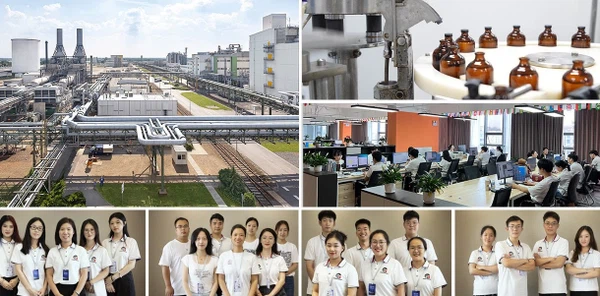
Purchase Chemical Raw Materials Click here: TIANJIN GNEE BIOTECH CO., LTD.