


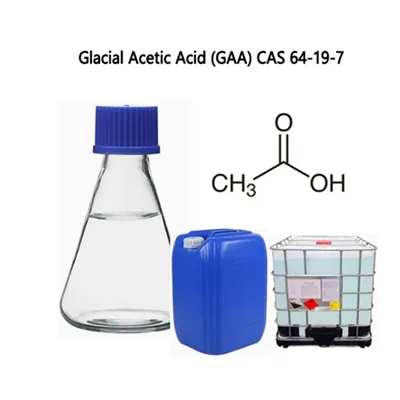

Glacial Acetic Acid Factories In China-Gneebio
Gneebio, a leading chemical manufacturer and distributor in China, announces the availability of Acetic Acid (also known as Glacial Acetic Acid or Ethanoic Acid, CAS NO:101-43-9) for global buyers. Available in bulk and smaller LTL quantities, Gneebio ensures high-quality supply, competitive pricing, and strict adherence to international safety standards.
Acetic Acid / Glacial Acetic Acid MSDS
| Property / Item | Details |
|---|---|
| Chemical Name | Acetic Acid / Glacial Acetic Acid / Ethanoic Acid |
| CAS Number | 101-43-9 |
| Molecular Formula | CH₃COOH |
| Appearance | Colorless liquid |
| Odor | Pungent, vinegar-like |
| Boiling Point | 118–119°C |
| Melting Point | 16.6°C |
| Density | 1.049 g/cm³ (20°C) |
| Flash Point | 39°C (closed cup) |
| Solubility | Miscible with water, ethanol, acetone |
| pH (Conc. Solution) | ~2.4 |
| Vapor Pressure | 11.4 mmHg (25°C) |
| Flammability | Flammable liquid and vapor |
| Reactivity | Reacts with strong oxidizing agents; may react with metals to release hydrogen |
| Health Hazards | Corrosive; causes burns to skin, eyes, and respiratory tract; harmful if swallowed |
| Environmental Hazards | Harmful to aquatic life in concentrated form |
| Storage | Store in a cool, dry, well-ventilated area away from heat and incompatible substances |
| Handling Precautions | Use protective gloves, goggles, and clothing; avoid inhalation and contact with skin or eyes |
| Emergency Measures | In case of contact: rinse thoroughly with water; seek medical attention for burns or ingestion |
| Certifications | ISO9001, ISO14001, GMP, USP, EP |
| Uses | Chemical manufacturing, pharmaceuticals, food & beverage, textiles, plastics, metallurgy |
About Acetic Acid (CAS 64-19-7)
What is acetic acid 64 19 7?
Acetic acid, also known as ethanoic acid, has the molecular formula C₂H₄O₂. It is a colorless, transparent liquid with a pungent odor. Under standard conditions, its melting point is 16.7°C, boiling point is 118°C, relative density at 20°C is 1.049, viscosity at 20°C is 1.22 mPa·s, and refractive index at 20°C is 1.3715. When anhydrous acetic acid solidifies at low temperatures, it forms an ice-like solid known as acetic acid ice, and its volume increases during the solidification process.
Acetic Acid Uses
| Industry/Application | Common Uses |
|---|---|
| Chemical Manufacturing | Production of acetic anhydride, acetate esters, solvents, and chemical intermediates |
| Pharmaceuticals | Active pharmaceutical ingredient synthesis and formulation processes |
| Food & Beverage | Acidulant, flavoring, and preservative in controlled concentrations |
| Textiles & Dyeing | pH regulator in dyeing and finishing processes |
| Plastics & Polymers | Production of cellulose acetate, polyvinyl acetate, and other polymers |
| Metallurgy | Pickling, metal cleaning, and degreasing |
| Laboratory Use | Reagent for chemical reactions and sample preparation |
What is the process of acetic acid?
Acetic acid has been prepared on an industrial scale by air oxidation of acetaldehyde, by oxidation of ethanol (ethyl alcohol), and by oxidation of butane and butene.
What are the storage conditions for acetic acid?
Storage in a flammable cabinet is appropriate for glacial acetic acid, which is both corrosive and explosive. Temperature Considerations: Acetic acid freezes around 62°F (16.7°C), although freezing does not harm the chemical.
Related Chemical Products from Gneebio
Bulk Industrial buyers often purchase DCM together with other solvents and intermediates.
Here are the most popular products:
| Product Name | CAS |
|---|---|
| Cyclohexanone (CYC) | 108-94-1 |
| Methyl Methacrylate (MMA) | 80-62-6 |
| 2-Methoxyethanol | 109-86-4 |
| Propionic Acid | 79-09-4 |
| Ethylene Glycol (Meg) | 107-21-1 |
| N, N-Dimethylacetamide (DMAC) | 127-19-5 |
Click here to get the latest global Acetic Acid (CAS 64-19-7) market prices for 2025.