


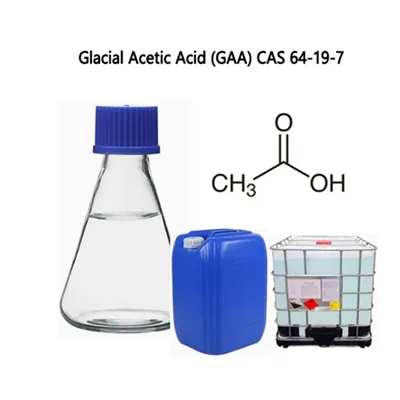

Glacial acetic acid is one of the most important industrial organic acids because of its high purity, strong solvency, stable chemical properties, and wide application range in chemical manufacturing, pharmaceuticals, food processing, textiles, and industrial synthesis.
What Is Glacial Acetic Acid?
Glacial acetic acid (GAA), also known as ethanoic acid, is the concentrated form of acetic acid with a purity level typically reaching 99%–100%. Its chemical formula is CH₃COOH, and it appears as a clear, colorless liquid with a strong pungent odor. Unlike common vinegar solutions that contain only 4–8% acetic acid, glacial acetic acid solidifies at approximately 16.6°C, forming ice-like crystals that give it the name "glacial."
Because of its extremely low water content, glacial acetic acid provides higher chemical reactivity and improved process stability in industrial applications. Its boiling point is approximately 118°C, while its dielectric constant of around 6.2 at 20°C allows effective ionic dissociation in laboratory and electrochemical systems.

How Is Glacial Acetic Acid Produced?
Industrial production of glacial acetic acid (C2H4O2) mainly uses methanol carbonylation, where methanol reacts with carbon monoxide in the presence of catalysts to generate high-purity acetic acid. This method is currently the dominant manufacturing process worldwide because of its high efficiency and scalability.
Another production method is biological fermentation, which is similar to vinegar production but followed by advanced purification and dehydration processes to achieve near-anhydrous acetic acid concentration. After production, additional purification removes water and impurities to achieve glacial-grade purity above 99%.
As an experienced chemical manufacturer and exporter, TIANJIN GNEE BIOTECH CO., LTD. focuses on stable quality control, standardized production management, and international export packaging to support global industrial supply requirements.
Properties of Glacial Acetic Acid
One of the most important properties of glacial acetic acid is its high purity and strong acidic performance. Compared with diluted acetic acid solutions, it provides:
- Better reaction efficiency
- Lower impurity levels
- Improved synthesis stability
- Reduced downstream purification requirements
Its low viscosity and broad electrochemical window, typically ranging from 1.5V to 4V, also make it suitable for specialized industrial and electrolyte applications. In addition, glacial acetic acid remains chemically stable under anhydrous conditions, helping manufacturers maintain consistent product quality during industrial processing.
The compound is highly soluble in water, alcohols, and many organic solvents, making it widely compatible with industrial chemical systems and laboratory formulations.
Industrial Applications of Glacial Acetic Acid
Glacial acetic acid is widely used in chemical manufacturing as a raw material for acetate esters, acetic anhydride, and vinyl acetate monomer (VAM). These chemicals are essential in producing adhesives, coatings, inks, plastics, synthetic fibers, and packaging materials. Global acetic acid demand has already exceeded 16 million tons annually, with significant consumption coming from polymer and PET plastic manufacturing.
In the pharmaceutical industry, glacial acetic acid is used as a solvent and synthesis reagent for antibiotics, aspirin, and various pharmaceutical intermediates. High-purity grades are especially important in laboratory and medical production systems where contamination control is critical.
The food industry also relies on diluted acetic acid derived from glacial acetic acid for vinegar production, preservation systems, sauces, and pickling applications. Its antimicrobial properties help reduce bacterial growth and improve food shelf life during transportation and storage.
In textile manufacturing, glacial acetic acid is commonly used for dye fixation, pH adjustment, and fabric finishing. Textile factories in Asia and other major production regions consume large quantities annually to improve color stability and fabric quality.
For detailed applications of glacial acetic acid, please click here.

Advantages of Using Glacial Acetic Acid
One major advantage of glacial acetic acid is its ability to improve industrial process control because of its very low water content. Compared with diluted acids, it generates fewer side reactions and improves overall production consistency.
Its high concentration also reduces the need for pre-concentration steps, helping manufacturers lower energy consumption, processing time, and operational costs. Because fewer impurities are introduced during synthesis, downstream purification requirements are significantly reduced.
Another important advantage is its versatility across multiple industries, including chemicals, pharmaceuticals, food processing, textiles, coatings, and industrial cleaning applications. This broad compatibility makes glacial acetic acid one of the most widely used organic acids in global industrial manufacturing.
Contact us for price, COA, and supply details. Bulk orders and global shipping available.
Glacial Acetic Acid Specification Table
| Item | Specification |
|---|---|
| Product Name | Glacial Acetic Acid |
| Chemical Formula | CH₃COOH |
| CAS Number | 64-19-7 |
| Purity | ≥ 99.5% (up to 99.9%) |
| Appearance | Colorless transparent liquid |
| Odor | Strong pungent vinegar-like smell |
| Acetic Acid Content | 99–100% |
| Freezing Point | 16.6°C |
| Boiling Point | 118°C |
| Density (20°C) | ~1.049 g/cm³ |
| Water Content | ≤ 0.5% |
| Grade Options | Industrial grade / Food grade / Pharmaceutical grade |